
Generative AI: Use cases, applications, solutions and implementation
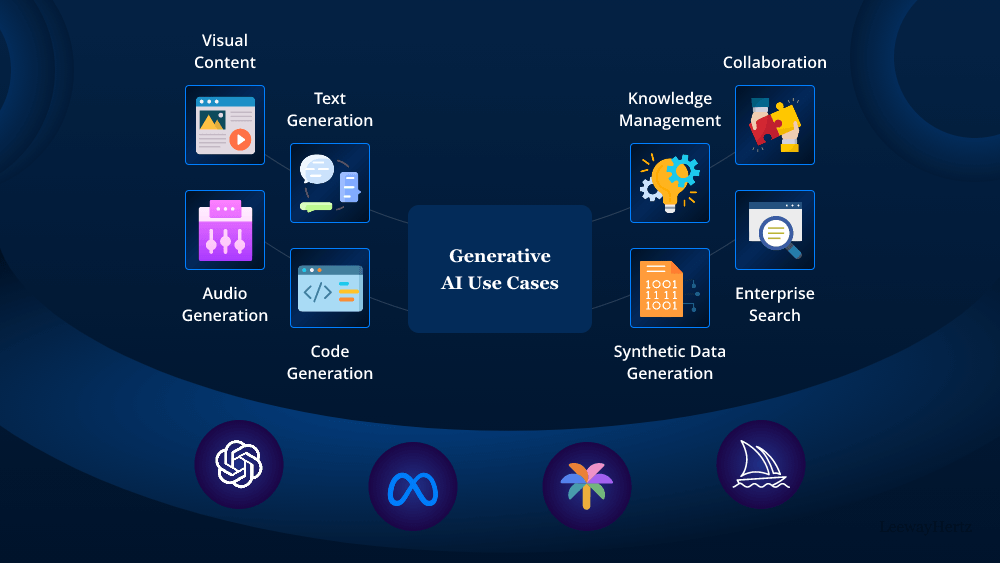
Generative AI demonstrates versatile applications across diverse industries, leveraging its capacity to create novel content, simulate human behavior, and generate innovative outputs based on learned patterns.

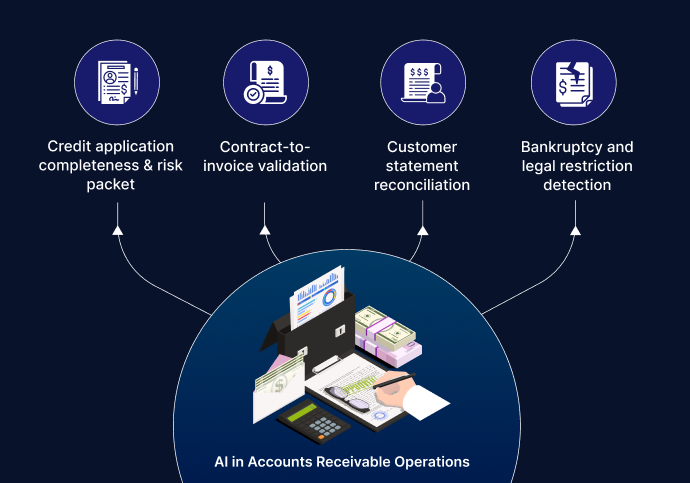
AI in Accounts Receivable Management: Function-Deep Use Cases, Operating Model, and Agentic Workflow Opportunities
AI is transforming accounts receivable by changing how teams read documents, classify exceptions, prioritize risk, match payments, prepare customer communications, assemble evidence, and support financial reporting.
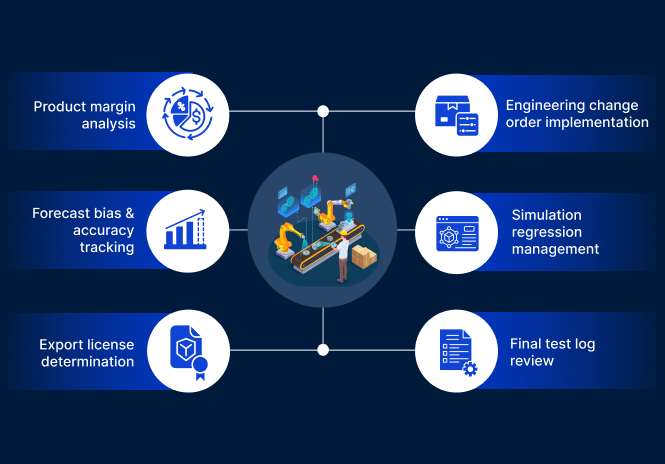
AI in High-Tech Manufacturing: Use Cases & Agentic Workflows
High-tech manufacturing is well-suited to AI because its core workflows already depend on structured production data, controlled engineering and quality documents, and repeatable decisions across design, fabrication, assembly, testing, and supply chain operations.
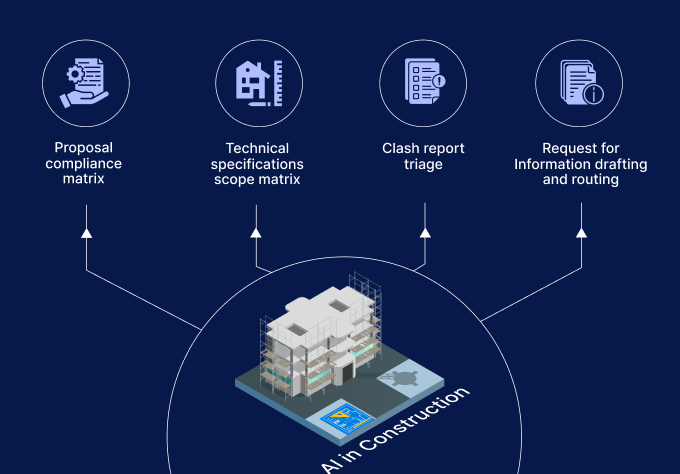
AI Use Cases in Construction: Mapping High-Value Opportunities Across the Operating Model
AI is transforming construction operations by helping teams connect fragmented project information with the decisions that depend on it.
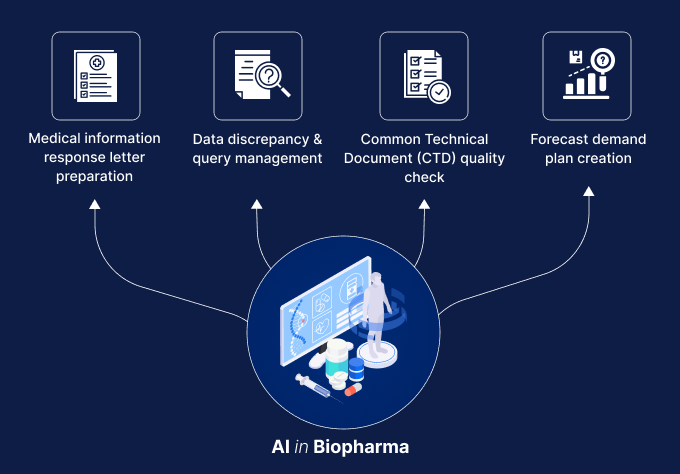
AI in Biopharma: Use Cases, Applications & Agentic Workflows
Biopharma is well-suited to AI because much of its work already depends on structured data, regulated documents, expert decisions, and repeatable workflows.
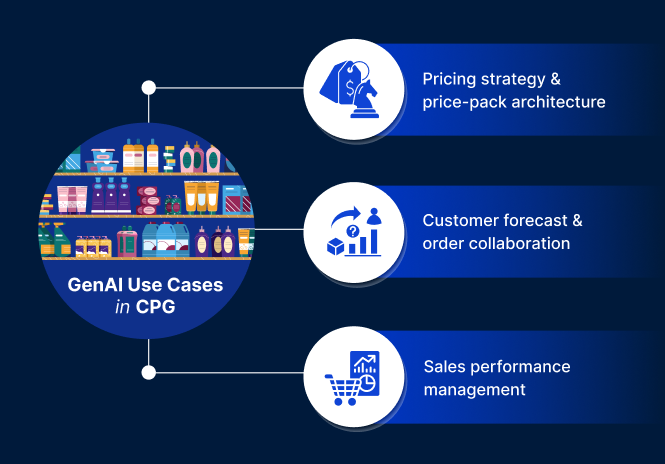
Generative AI in Consumer Packaged Goods: Enhancing Workflows and Operational Efficiency
Consumer packaged goods is a practical setting for generative and agentic AI because the industry runs on data and documents, but the pressure shows up in everyday decisions.
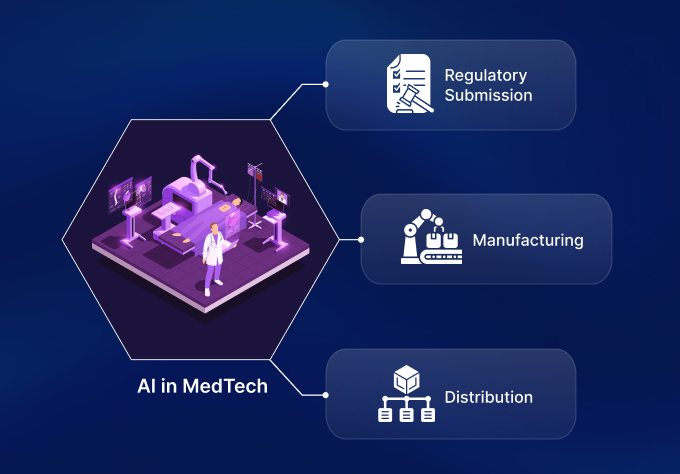
AI Use Cases in MedTech: Opportunities Across Key Functions
By grounding AI opportunities in specific sub-processes, MedTech organizations can prioritize use cases more effectively, design appropriate governance, and build implementation roadmaps that align with regulated workflows.
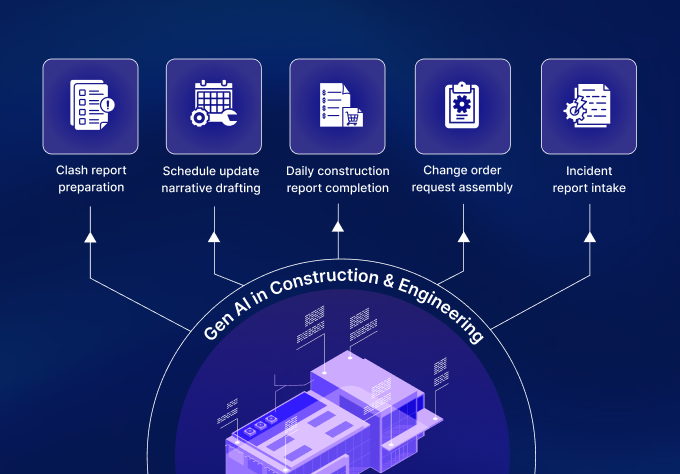
Generative AI in construction: Mapping high-value use cases across the operating model
By mapping AI opportunities at the sub-process level, construction firms can move from broad innovation ideas to executable workflows with clear business value, trusted source documents, review responsibilities, governance controls, and implementation paths.

AI in Pharmaceuticals: Enhancing Workflows and Operational Efficiency
Pharmaceuticals is one of the strongest candidates for AI adoption because the industry operates at the intersection of science, data, documentation, regulation, patient safety, manufacturing quality, and globally distributed operations.
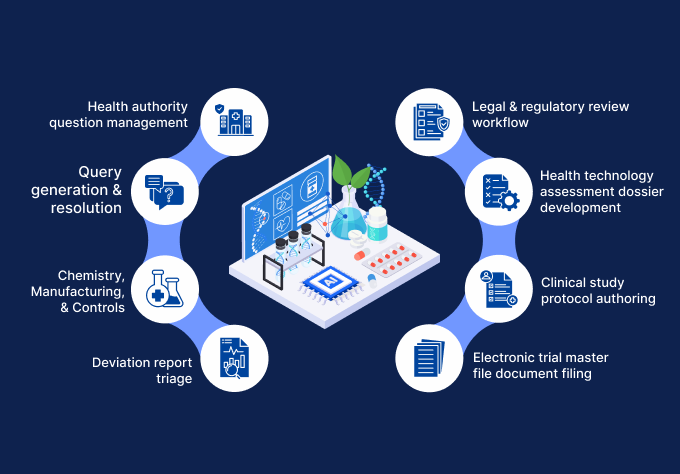
GenAI in Pharmaceuticals: Transforming Operations Across the Operating Model
Pharmaceuticals is one of the strongest industries for generative and agentic AI because its work sits at the intersection of regulated documents, structured data, scientific judgment, exception management, and controlled handoffs.

AI in consumer packaged goods: Use cases mapped across the consumer packaged goods operating model
By mapping AI opportunities at the sub-process level, CPG companies can move from broad innovation ideas to executable workflows with clear business value, data requirements, review points, governance, and implementation paths.
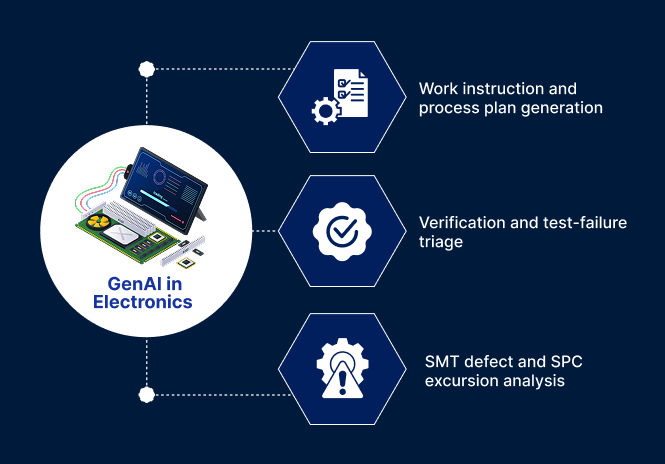
GenAI in Electronics: Enhancing Engineering Productivity and Efficiency
Electronics is one of the preferred industries for generative and agentic AI because its work sits at the intersection of design data, engineering documents, component decisions, regulatory evidence, manufacturing exceptions, and high-volume production workflows.
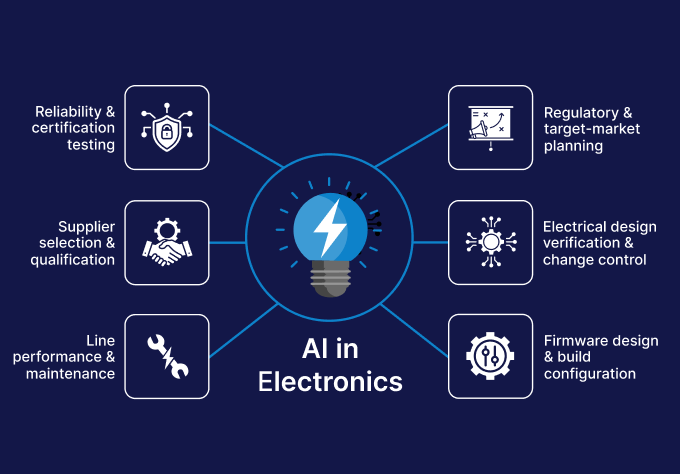
AI in Electronics: Mapping AI Opportunities Across the Operating Model
Electronics is a strong fit for generative and agentic AI because critical decisions often depend on reconciling complex product specifications, supplier records, compliance evidence, test results, and manufacturing data across multiple teams and systems.


Follow Us


